What to Consider When Procuring AI Servers for Enterprise Use
Summary
For enterprise AI server deployment, procurement should assess GPU, CPU, server memory, storage, and networking together with data center power, cooling, compatibility, and delivery testing to reduce risk during AI computing hardware selection.
Related Products
Start with the workload
Before procuring an AI server, identify whether the workload is large-model training, inference deployment, image or speech recognition, scientific computing, or a private AI platform. Each workload changes the requirement for GPU quantity, memory capacity, CPU resources, storage throughput, and network bandwidth.
Training usually places more emphasis on GPU compute, memory capacity, GPU-to-GPU communication, data-read speed, and cluster networking. Inference projects often focus more on power, deployment density, response latency, concurrency, and room for expansion. Defining objectives, budget, deployment window, and data center conditions early reduces later rework.
System stability is not determined by the GPU alone
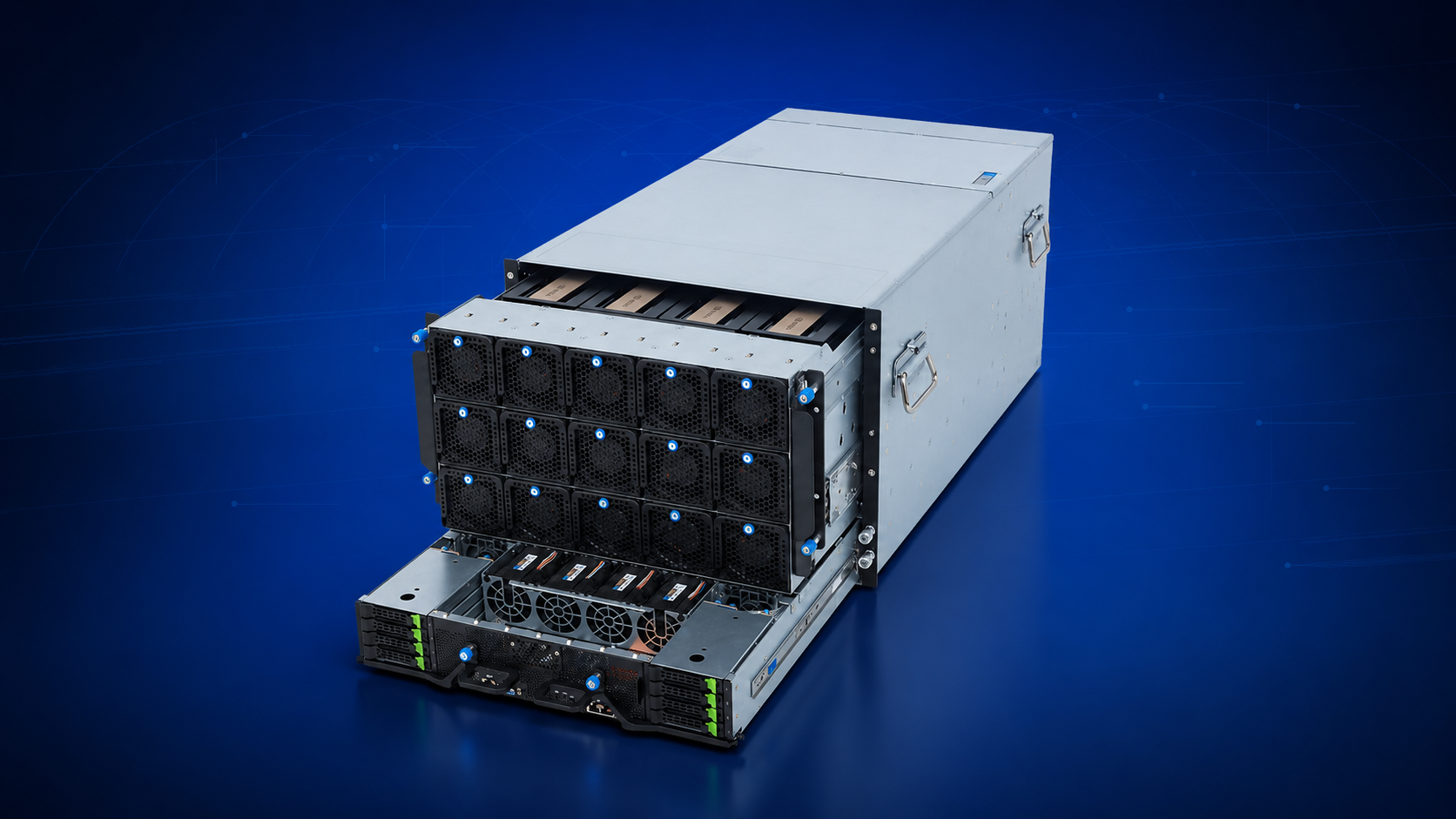
The GPU is central to an AI server, but stable operation also depends on the CPU platform, server memory, NVMe SSDs, RAID or HBA, networking, power, cooling, chassis design, and software compatibility. Storage throughput can affect data loading, network capacity can affect multi-node coordination, and unsuitable cooling or power can compromise long-duration operation.
Enterprise procurement should check the motherboard platform, PCIe lanes, memory specification, drive interfaces, NIC speed, driver versions, and operating-system environment together. For volume projects, model consistency, spare-part availability, and delivery windows also matter.
Pre-delivery testing matters
AI servers are normally project purchases. Before delivery, configuration confirmation, component matching, compatibility checks, assembly testing, and baseline stress testing are recommended. Common checks include startup recognition, GPU recognition, memory checks, storage I/O, network connectivity, driver environment, and thermal behavior under sustained load.
Aoscend recommends providing model, quantity, budget, delivery plan, and deployment conditions together. This enables configuration guidance and supply confirmation around the project rather than a price-only discussion for a single component.